Most marketing costs you money. Breakthrough prints you money. Why?
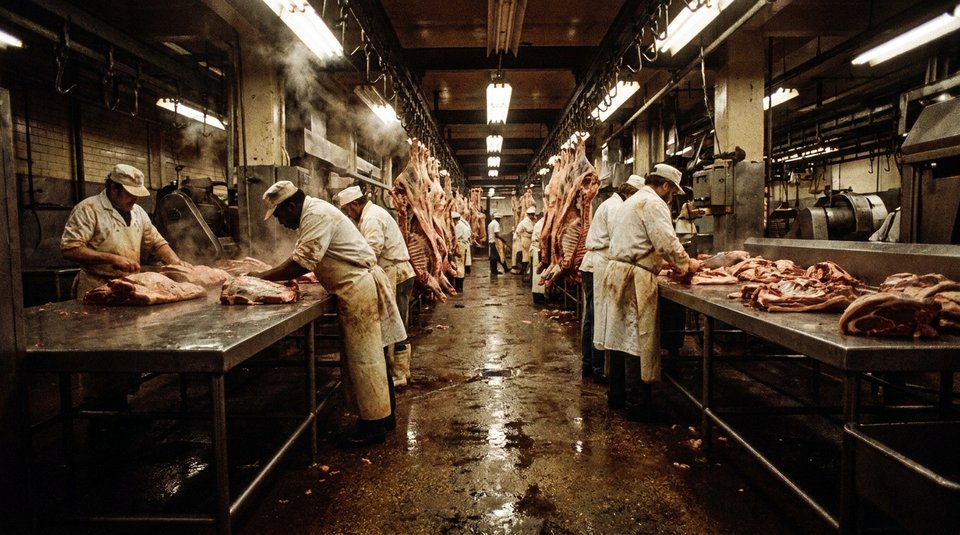
“My father put me on a meatpacking floor at 12 years old. He knew exactly what he was doing…”
Eastern Market, Detroit. My father’s classroom taught me the true cost of a dollar. No marketing degree teaches you that.
Because his son was going to learn the business from the ground up — not from a desk, from the floor. A family meatpacking business in Detroit. And not a small one.
I cleaned grease pits, cut and boned hams, loaded trucks.
My friends went to summer camp for two months. I got one.
Summers, Christmas breaks, Easter recess — I worked the plant.
At first I hated it. But I did the dirtiest jobs on the line — and never complained.
The guys respected that. I felt proud. I was doing a real job, something of value, and I got paid. It wasn’t an allowance; it was my money, money I earned…
Most marketing is assembled by agency employees learning on your dime. Breakthrough is created by people who learned on their own dime.
My dad was right.
I’d done every job on that floor. I knew what each one took. Nobody had to explain the business to me.
Now it was my money.
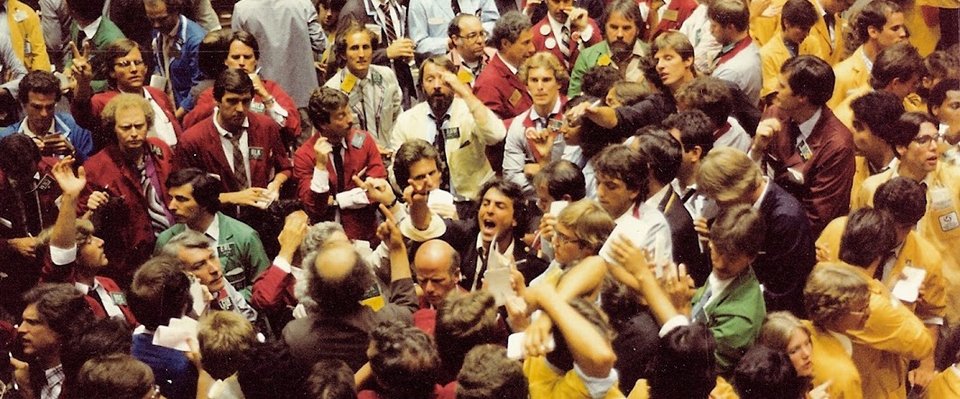
Pork belly pit, Chicago Merc.A kid, and it’s his family’s money.
Then off to the rough-tough pork belly trading pit at the Chicago Mercantile Exchange. My goal was to learn “hedging” to protect the family business. And to make some real money on my own.
I was a 20-year-old kid.
Fortunes made. Fortunes lost. Every day.
There was no room for error.
I made a mistake on a phone order — said “buy” instead of “sell.”
One wrong word. $20,000 gone.
I was gut-punched. Sick to my stomach.
Not somebody else’s money. I lost my own money. My family’s money.
It’s gotta work. Make payroll.
Pay the mortgage. Cover the bills.
I’ve carried that sense of urgency with me into every business I’ve built and every dollar I’ve spent on marketing since.
When it’s your money, there’s one metric:
Revenue.
The rest is decoration.
Then it was all on me.
And I was afraid.
38 cities. One summer.Anyone can do the easy part.
My father died. I sold the family business.
The safety net was gone.
Up to then, you’d have been right: handed to me. My dad’s company. My dad’s name.
Not anymore. Now I’d earn it — or lose it.
I tried a few things. They didn’t work. I needed something to work.
Then — Lollapalooza. 1994. A 38-city national rock tour. Smashing Pumpkins, Beastie Boys, Green Day. Twenty thousand people a night.
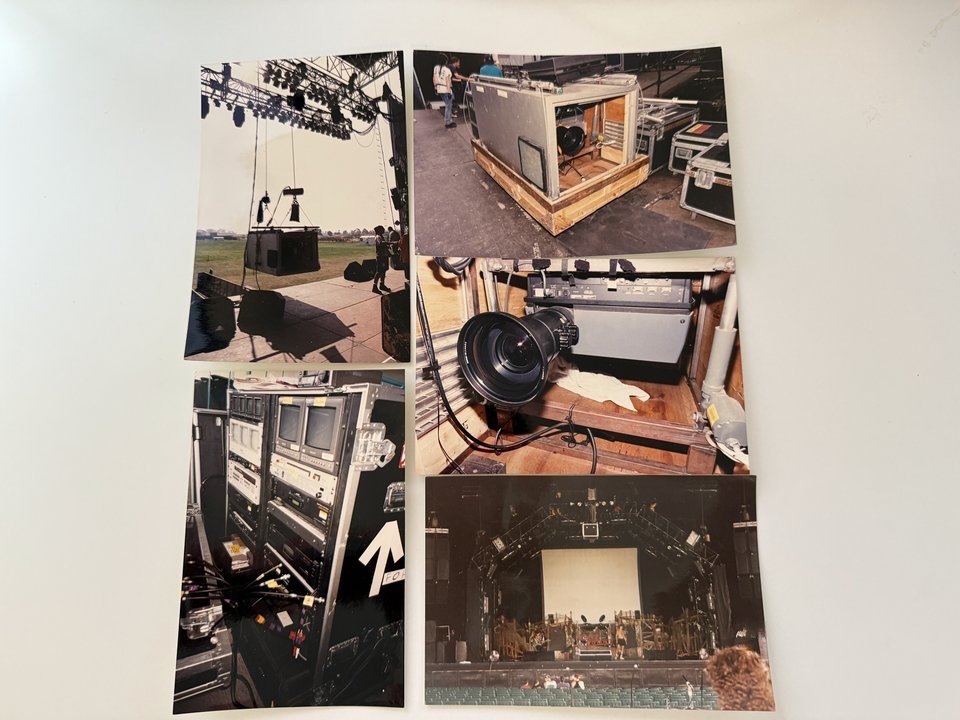
Video projectors went from the size of a Volkswagen to the size of a coffee table — and finally bright enough for a live concert.
The Smashing Pumpkins wanted video projections. The big production houses passed.
I saw these new projectors and I knew. I told the Pumpkins I could do it.
The big companies couldn’t
make it work. I did.
A short spring tour was the proving ground.
We found out fast what worked and what didn’t.
I hired the sharpest theatrical production engineers, built a remote-control auto-focus system and mounting gear. Set up and tear down every night. I became a roadie to perfect it.
The psychedelic images, the video montages — that was Billy Corgan’s vision. I made it real. Nobody was doing anything like this.
Fillmore West, San Francisco. Lights out. Then, on the screen behind the stage — something that crowd never forgot.
“I was at this show and it was INCREDIBLE… Right before the Pumpkins came out, the lights went dark and on the screen — the car chase from Bullitt. Steve McQueen running the bad guys off the road, ball of fire. The lights came on and the band walked out. God, what a show…. :)”— A concert-goer, thirty years later
Lights up. Band hits the stage. Match to gasoline.
The place goes insane.
First time I’d built something that was mine — no family name underneath it.
Touring video projection.‘State of the art’ 1994.
No going back.
Before me, nobody had done it. After me, everybody did.
That tour pretty much perfected the system. Every show ran the same way.
Yet living on a bus, new city every night, wasn’t for me.
I was ready to walk away — and right there, in the middle of all that, AOL.
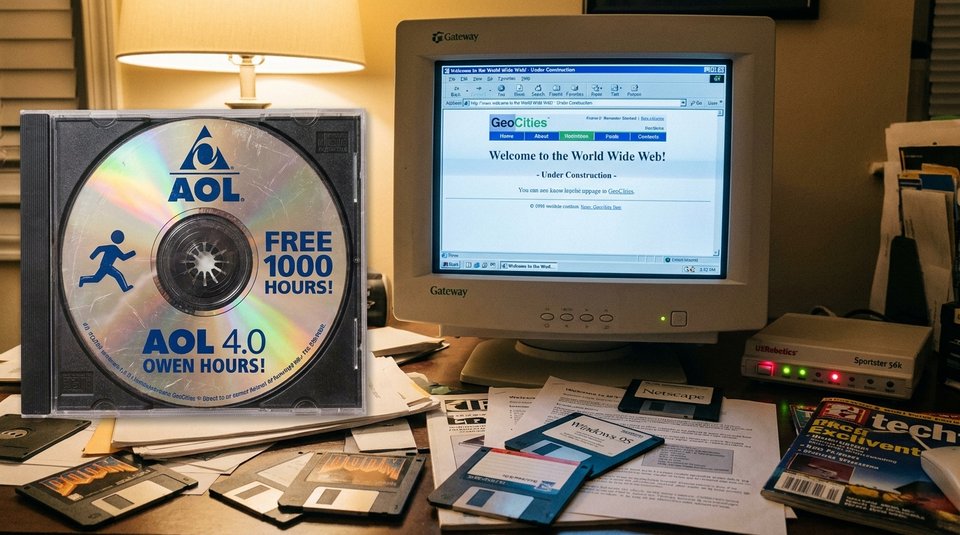
AOL was a tour sponsor. They tried to broadcast the concerts live over the internet. You can’t stream on a 48K modem — but I saw what was coming.
The AOL crew pulled me straight into the roaring ’90s internet boom. Direct response marketing.
The Wild, Wild West.
Internet Marketing is Born.
Back then, the whole Internet fit through a phone line.
“The Internet,” “Online” in the late 1990s — no rules and a hell of a lot of fun. It was the place for mavericks, gamblers, pirates, and marketers. Before the corporations came in.
We had to build our own servers in my loft in Chicago — and hardwire them directly into the internet backbone. When a server crashed at 4 AM, I drove downtown and rebooted it by hand. There was nobody else.
Before Google. Before Facebook. Before YouTube. Before anyone.
AOL was the internet. The Tribune Company partnered with them to launch Digital City — local guides for every major market. Plastic surgeons needed patients. Lawyers needed clients. People were going online to find them — but there was nothing for them to find.
The “digital agencies” showed up — employees who got a paycheck no matter what. Playing with house money. When the checks stopped, the leads stopped. Nothing stayed.
Stop paying, and it’s gone. You only learn that on your own money.
I had to build a system that kept working after the spending stopped.
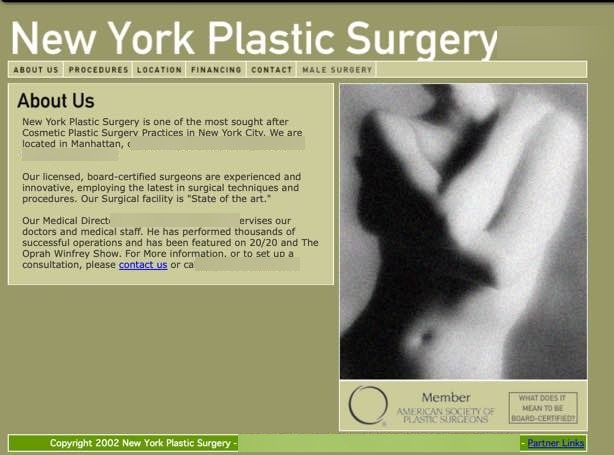
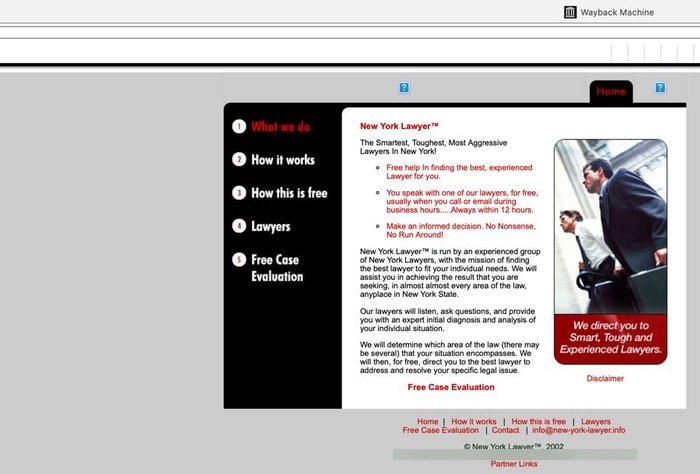
I built some of the first lead-generation websites on the internet. Doctors. Lawyers. Plastic surgeons. Then expanding to the first search engines — Excite and Yahoo. My money was on every click, every test. It had to work. The agencies couldn’t compete.
My sites. New York.Before “lead gen” had a name.
My Money. My Risk.
$397 Million in Results.
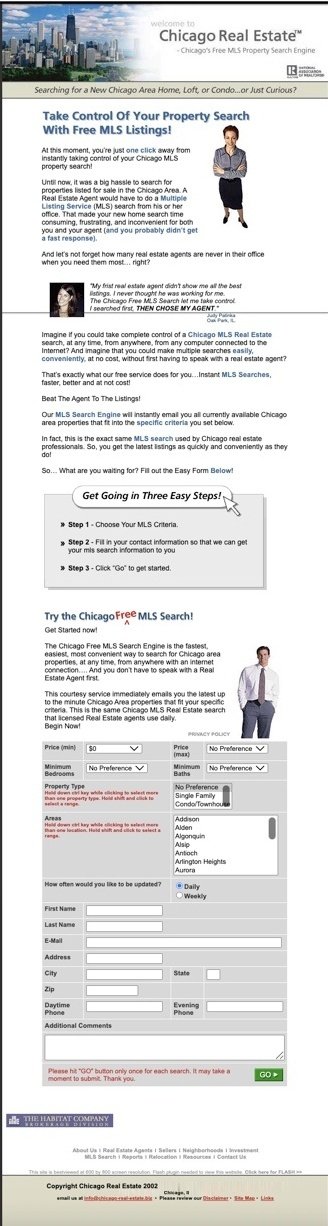
Home Search v1. Crude — but it struck oil.
The year 2000. Peak dot-com mania. Pets.com blew $17 million on a sock puppet. Webvan burned through a billion bucks.
Amazon killed the bookstore. Napster broke the record labels. Expedia wiped out the travel agent.
Dot-com crash cleared the field. I went into real estate.
Brokers controlled the home listings. Buyers had to come to them — sit in their office, look at their printouts, search on their terms.
They were next.
Home Search v2. Buyers wantedto search without an agent;we made it real.
In 2001, brokers were forced to put their listings online. Most fought it. The rest were slow — very, very slow. It was over.
Nobody was building what buyers wanted: a way to search for homes on their own time, without talking to an agent.
So I built it — Las Vegas first. The hottest market in the country. A free MLS property search, one of the first on the internet. Overwhelmed with buyers. Grand slam.
Then Chicago. I connected with Yuval Degani, owner of Dreamtown Realty. He saw what I saw. They had the agents and the brand. I built the lead-generation system.
Two of the biggest markets in the country — Las Vegas and Chicago — all before Zillow or Redfin existed.
In Chicago we dominated. Condos. Homes. Neighborhoods. Someone searching “Chicago condos” landed on a site built exactly for that.
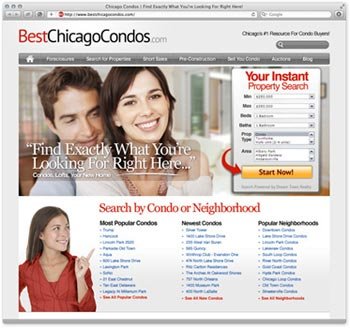
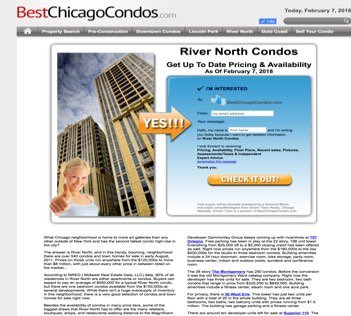
Then BestChicagoCondos.com — where everything came together into one machine.
Buyers started pouring in.
The website was only half the system. The other half — a fast follow-up sales team…
The team: agents on the phones. A dedicated office. Every lead answered within three minutes. Converted like gangbusters.
Home Search v3. Perfected —150 Chicago leads a day.
Those buyers didn’t close overnight. The average condo buying journey was 19 months. So I built an automated email system — personalized property updates, week after week.
The emails produced 10x the sales of search alone — and sales up to four years after sign-up.
$397 million in closed sales. Chicago Agent Magazine called Dreamtown “the leader in online Chicago real estate.”
But here’s what the $397 million doesn’t tell you.
Online leads were the rocket fuel.
Agents, listings, market share.
All of it.
Nobody recruited those agents. The buyers did that. Agents want to be where the deals are — and every lead that came through that system made Dreamtown the brokerage they wanted to join.
More agents. More listings. More business — none of it in that $397 million number.
Lead generation built the brand.
The brand made the leads convert.
One system.
Done right, lead gen doesn’t just boost sales — it powers the whole business.
Zillow and Redfin scaled nationally what I’d proved locally. The whole industry followed me.
The Tribune — a $3 billion giant, four years ahead of me — tried the same market and went bankrupt. They never saw what the buyers wanted.
I sold the business to Dreamtown in 2015. For ten years, nothing was the real thing — not even crypto, when the whole world swore by it. So I waited.
Now It’s Your Money.
breakthroughnounbreak·throughˈbrāk-ˌthrüpluralbreakthroughs1:a sudden advance, especially in knowledge or techniquea medical breakthrough2:an act or instance of moving through or beyond an obstaclea breakthrough in the talks between the region’s leaders3:an offensive thrust that penetrates and carries beyond a defensive linea breakthrough at the frontYou already know what yours would be.
You built a business people depend on: your team, your customers, your reputation.
It’s yours to carry now. Every call yours, every risk your own.
You learned to tell the real thing from the next shiny object — with your own money on the line.
And you got good at it.
Now the ground is moving again. They call it AI.
You’ve been pitched it a hundred times — a tool, a platform, the thing that changes everything.
And for the first time in a long while, you can’t tell.
Whether you’re early or late. Whether the next signature is the breakthrough or the expensive mistake.
You’ve seen what happens when you trust the wrong people.
You brought in the pros before. They ran campaigns. They sent reports. You wrote the checks.
Nothing moved.
Your people aren’t the problem.
They’re good at what they were trained to do.
But they were trained on other people’s money.
They never built a thing where their own livelihood was the bet.
They never felt it in the gut — the way you do — the difference between a breakthrough and something that just looks like one.
Nobody can tell breakthrough from decoration until it’s their own money on the line.
You can. You’ve been doing it your whole career.
They can’t. They’ve never had to.
So the real risk now isn’t moving too slow.
It’s handing the call — and your money — to people who can’t tell the difference.
And finding out a year and another budget later that you paid for decoration.
What you need now isn’t another campaign. Or another AI tool.
It’s breakthrough.
And breakthrough doesn’t come from someone who learned on a paycheck.
It comes from someone who learned the way you did.
You’ve heard the right words before. You wrote the check. It didn’t work.
So don’t trust the words.
Not even mine.
What’s in It for You
It’s not about AI.
It’s about your breakthrough.
If there’s one to be had, you’ll get it.
It may or may not be AI.
If AI is part of your breakthrough, it becomes your revenue infrastructure — not a tool bolted on as an afterthought.
You get a more powerful company.
One that turns an idea into a working system in days, not months.
Faster than your competitors. At less cost. At less risk.
The company you’ve always wanted to run.
You get the system I’d build if it were my money.
Not simply a plan that looks good on paper.
A revenue system built into your business. You own it. When I leave, it stays.
And you’re not the experiment.
I’ve already built it — it’s running right now, paying for itself.
My last build would’ve taken two developers, a tech admin, and all the back-and-forth between them.
The system did it instead — better, faster, and $19,000 cheaper.
You get me. Not one of my crew. One business. All in.
I start inside your operation — your numbers, your team, your market.
I find the opening before I build anything.
Leads come in craving what you have.
I measure one thing. Revenue — the kind that’s yours to keep. The brand I build is the one that drives it.
I change how it’s done. And I stay until it works.
Your market shifted.
The momentum stopped.
You already know this.
Two businesses. Same market. Same problem.
One writes another check. Another agency. Another strategy deck. Another year of reports.
More of the same.
Or worse.
A year from now they’re still writing checks — if they can still afford to.
The other picks up the phone.
Six months later… buyers flooding in. Your team closing, not chasing. Revenue growing every month.